Funny Compare Mens Style 1947 Vs 2017
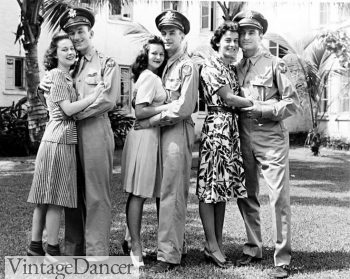
1940s couples with men in compatible
Always since the stock market crash of 1929 and the astringent economic depression that followed for about of the 1930s, fashion had been an escape. Looking to the movies, women and men escaped their difficult daily lives and imagined a carefree and very glamorous life in Hollywood. Way followed picture stars' clothes both on and off the gear up. Bias cut dresses were small-scale merely feminine. Men's wide shouldered suits mimicked the masculine physique underneath. Rich furs, white paste jewelry, and coordinated accessories looked like a meg bucks. Fashion did not reflect existent life in the 1930s.
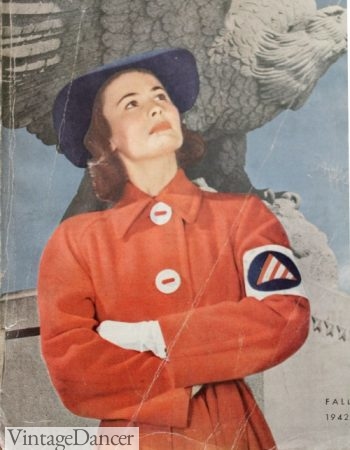
1942 Sears Catalog Cover
The tables turned in the 1940s. WWII began in 1939 and fashion took on a new role. Men'south style stopped progressing until afterward the war – a reflection that well-nigh men were serving in uniforms instead of enjoying life at habitation. Women's mode echoed men's traditional clothing with homo-tailored dresses, coats and hats. These new serious looks were not almost an idealized life, but about supporting the state of war endeavor through style. A woman's duty was to have care of the homefront, both at her household and in jobs previously held by men. The wearable reflected this practical and conservative fourth dimension where materials were limited, even after the war ended in 1945. Information technology took until the terminate of the decade for women to adopt Dior's New Look that returned women to an ultra feminine silhouette, and for men to prefer a relaxed fit in their wearable.
Allow's begin the 1940s Manner Guide series with a more than detailed summary of way history. Offset, for women (click here to bound to men):
1940s Fashion for Women
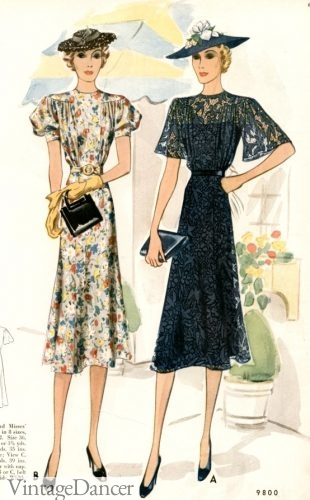
Belatedly 1930s Women's Fashion
The 1940s were defined by a clean and slim silhouette with a somewhat armed forces feel. Jackets, blouses, sweaters, and skirts were brusque and close-plumbing equipment, all unadorned and with the requisite sharp shoulder pads. Long sleeves were out, dresses were casual, and pants and 'playsuits' became everyday attire.
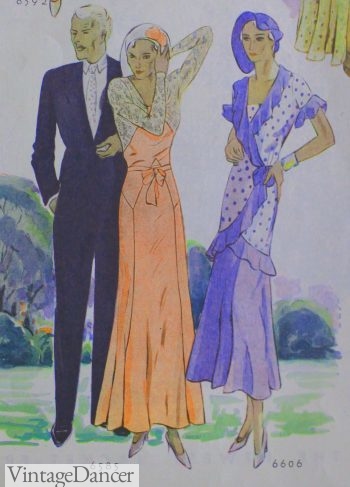
1931 Fashions
Before Globe State of war II, Paris was the epicenter of way. All of the new styles originated at that place. Anonymous American designers simply copied the looks coming from France for their wealthy clientele or for stores. The 1930s will be remembered for their glamour, despite the Depression. Hollywood starlets were clothed in long, draping, flowing gowns made of satin, crepe, silk, and velvet. Dresses and gowns began to be bias cutting, meaning the fabric was cut diagonally, assuasive it to cling to curves. Coco Chanel brought the solar day suit into fashion, with a fitted jacket and a long brim. Fur was the most wanted luxury detail.
After Germany took over Paris in 1940, many of the designers closed their style houses, some fleeing the country. Those that did stay didn't see their styles get out the country. The balance of the world was left to come up with their own styles. New York took over, creating a look that was dominated by the state of war going on across the ocean.
Advertiser
A lot of the materials normally used for article of clothing became scarce during the state of war. Wool was used to make uniforms and coats for the soldiers. Leather was needed for their boots. Silk, commonly used to brand dresses, undergarments, and stockings, was turned into parachutes and waterproof maps. Metal and various chemicals were needed to brand just near everything for the war effort.
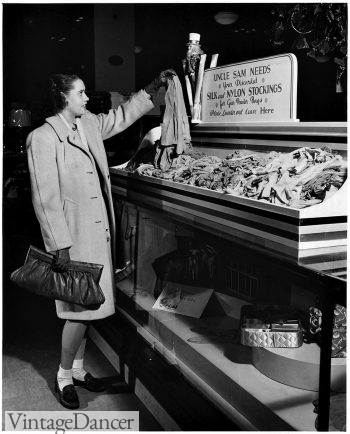
1942, a woman donates her silk stockings to be made into parachutes. She wears socks instead.
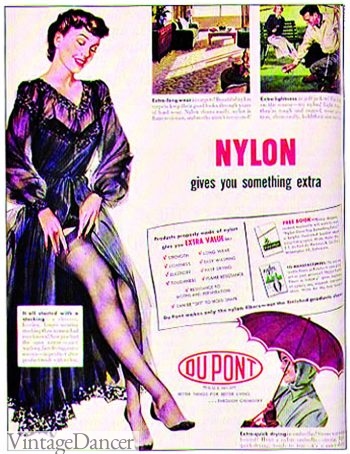
1949 Nylon Stockings Advertizement
Civilian clothing had to resort to using new materials. Nylon, created by DuPont and introduced in 1938, replaced silk for women's items until it began to exist used for the same purposes every bit silk for the war. American cotton began to have over as a coincidental fabric of option. Wool blends were introduced to save wool for military machine uses, and the synthetic textile rayon became the near widely used material of the fourth dimension. A softer, silkier version was used for day dresses, and a thick version replaced wool for suits and coats. 'Vinylite' could be used instead of leather, and other forms of plastic were used for all kinds of applications.
Advertiser
Aside from breakthroughs in man-fabricated materials, fashions of the 24-hour interval were almost afflicted by the governmental clothing restrictions put in place for the duration of the war. The very silhouette that dominated the '40s was a casualty of war. In Britain and elsewhere in Europe, ration coupons for clothing were given out on peak of the restrictions, and they didn't get in. The United states avoided the coupons past putting strict rules in place for manufacturers. The only clothing item that was rationed were leather shoes starting in 1943, and they were only bachelor in black, white, navy and brown.
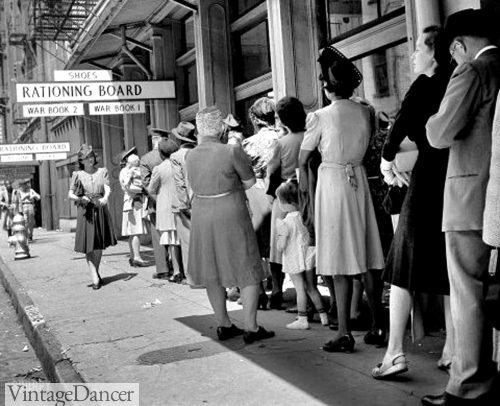
March 1943. New Orleans, Louisiana. Line at rationing lath

The United States Production Board put into identify 'Limitation Orders,' society 50-85 governing women's clothes, which were in effect until 1946. These restrictions were much less severe than in Europe, only yet greatly limited what clothing was to look like. The length and width of blouses, skirts and dresses was restricted, as was sleeve length and hip width. The amount of pockets, buttons, pleats, and seams was dictated, and most decorations were not allowed. This came to exist known every bit the 'no textile on fabric' dominion. The colors of fabrics were set each season to conserve chemicals, so only a handful of patriotically named hues were available. The heels on shoes could simply be 1 ½ inches high.
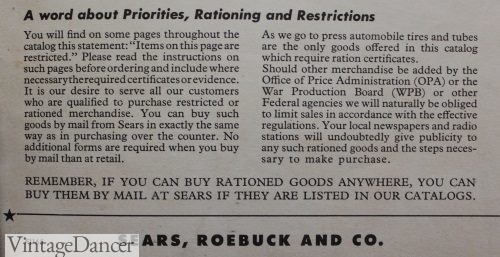
1942 Sears noticed about rationing
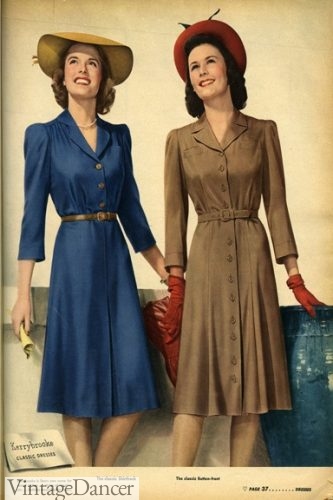
Simple, applied, 1940s shirtwaist dresses
All of this interference resulted in a slim, uncluttered look. Skirts were shorter and tighter than anyone was used to, and shirts and jackets were apparently and practical. As the prices of clothes soared due to the shortages, they had to last longer and go further. Pieces were extremely well-tailored and the styles started to work for a multitude of occasions. Although eveningwear was still fabricated and worn, people began to dress more casually in restaurants and theaters. Versatile separates and sportswear took over, and women began to vesture pants as a safety precaution in the factories they were working in.
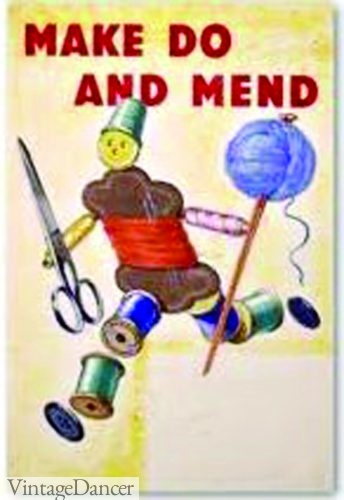
Make do and Mend booklet
Domicile sewing became popular. In Europe, fabric could be had for fewer coupons than a ready-made garment. In the Usa, pattern sales skyrocketed. Citizens were encouraged to mend sometime clothes, recycle one-time fabrics into new garments, and combine dresses to brand new ones. Pamphlets with titles like 'Make and Mend,' and 'Make It Do Until Victory' showed women how to set and care for their dress to make them last, and to brand them from other household items similar blankets and defunction. Here is a volume on Brand-overs from Coats and Suits.
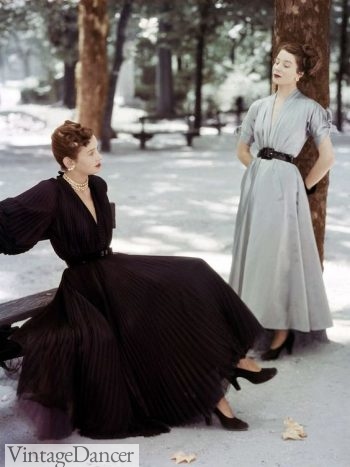
1947 Dior's New Look
The manifestly and functional styles lasted throughout the war. When U.S. restrictions were lifted in 1945 and '46, women connected to wear their war-fourth dimension garb. Colors did return to wardrobes, softer and brighter, and skirts got a little fleck longer and more flouncy. In 1947, Paris designer Christian Dior showed his debut collection, presently to exist dubbed the 'New Look,' which was the total opposite of the severe styles of the war. The silhouette was soft, an extreme hourglass figure accomplished with a corset and bust and hip padding, and the skirts were enormous confections of fabric.
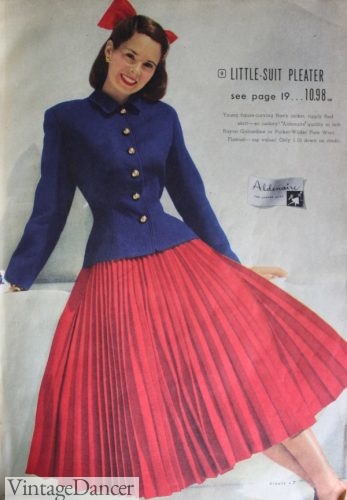
1848 reddish and blue skirt and jacket
The New Look didn't accept off in the United States. Women felt that Parisian designers had acted equally though no war had taken place, while they sacrificed their wardrobes for the state of war endeavor. However, most were as well ready for a change. As soldiers came back, women stopped working and returned to new homes and cars in the suburbs. The economy prospered, and clothing manufacture became cheaper and easier thank you to new methods devised for the war. New York and California remained in the fashion game, and American designers started to be known by name. Eventually, women adopted the New Await that would become the style of the '50s.
1940s Women'due south Manner History
- An intro to 1940s way history
- 1940s Women's Style – Starting time here and learn all about 1940s Fashion for Women
- 1940s Fabrics and Colors- Acquire what colors and types of textile were common in the 1940s
- 1940s Dresses – x common styles worn in the 1940s
- 1940s Day Dresses – Learn about the unlike styles of 1940s day dresses
- 1940s Shirtwaist Dresses – Acquire most and shop for this pop '40s dress
- 1940s Suits – Women'southward Victory Suits
- 1940s Tops and Blouses – All styles of 1940s women's tops and blouses
- 1940s Sweaters & Cardigans – Staying warm with knits
- 1940s Women'south Coats & Jackets
- 1940s Skirts – From elementary A-line skirts to fun dirndl skirts
- 1940s Formal Dresses – Learn about formal dresses, prom dresses, and cocktail dresses
- 1940s Women'southward Pants – Acquire most and shop for 1940s and 1950s style pants & overalls for women
- 1940s Rompers and Shorts – Summer playsuits, shorts and pedal pushers
- 1940s Swimsuits history – Learn all about fabulous swimwear in the 1940s
- 1940s Shoes – Acquire near and store for 1940s way ladies' shoes
- 1940s Stockings – Seamed stockings and socks history
- 1940s Working Women's Clothes – Rosies, shop girls and nurses
- 1940s Zoot Girls – History of the urban Zoot Suit style
- 1940s Teenage Girls' clothing – Trends and styles worn by teens
- 1940s Lingerie History – A expect at the types of bras, girdles, and slips
- 1940s Sleepwear – Nightgowns, pajamas, robes, and reddish jackets
- 1940s Hairstyles for Women – A variety of archetype hairstyles through the decade
- 1940s Hairstyles for long pilus – Tips on creating a 1940s hairstyle with long pilus
- 1940s Pilus Snoods – Brand or buy a 1940s hair snood and keep your hair in identify
- 1940s Chapeau Styles – A History of over 20 popular hat styles, with pictures. Run across Hair Accessories too
- 1940s Jewelry Styles – Pop jewelry styles and trends
- 1940s Sunglasses – Women's sunglasses and eyeglasses
- 1940s Handbags – Purses, day bags and evenings bags
- 1940s Women's Accessories – Belts, gloves, head scarves
- 1940s Hymeneals Dresses – History of the bride'south nuptials gown
- 1940s Makeup History and Tutorial – Also where you tin can buy 1940s makeup
- Plus Size 1940s Fashions – History of full figure clothing in the 1940s. Check out our fashion advice for plus sizes also
- Fashion communication for the petite woman and the alpine woman
- Where to shop for repro and vintage inspired 1940s wearable
- 1940s Outfit Ideas – 16 looks you can create
- 1940s Coincidental Outfit ideas – Coincidental, sporty looks for summer
- 1940s Fall and Winter Outfits
Shop 1940s Wearable – New, inspired and reproduction
- Dresses and plus size dresses
- Pivot Up Dresses and Sailor Dresses
- Evening Gowns and Wedding Dresses
- Skirts
- Pants and Trousers
- Shorts and Rompers
- Tops and Blouses
- Sweaters
- Coats and Jackets
- Swimwear
- Shoes – more than flats, boots, sandals, and wide sizes
- Stockings and Lingerie
- Accessories – gloves, belts, and headscarves
- Hats
- Sunglasses and Eyewear
- Hair Accessories
- Makeup Guide
- Jewelry
- Sewing Patterns
- Costumes – Halloween and Party
- Children's Clothing
- 1940s Vesture and Shoes in the UK
1940s Men's Fashion History
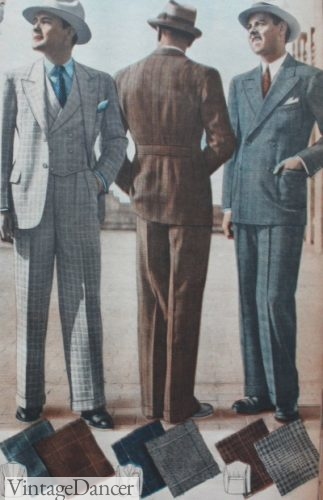
1937 men's suits
1930s men's clothing, either for day, sport, or evening were styled to make a man feel "larger than life." During the 1941-1945 WWII era, fabric rations express cloth to make suits but non style. The Zoot Suit with its bright colors, baggy legs and long jackets was a complete deviation from the norm. However, that trend was merely popular with the immature, urban men during the state of war years. Most men chose basic men's suits that haven't changed dramatically since the beginning of the century. There were, however, a few features that fabricated a suit style unique to the 1940s.
The war board placed restrictions on men'southward article of clothing simply equally they did for women. The restrictions were not as dramatic as they were for women. Suit pockets could not have flaps, trousers could not be more the xix inches effectually or exist cuffed, and suits were sold without vests (waistcoats). The cuffed look was then popular that men apace figured out you could purchase longer length pants and gage them at home. The double breasted suits were forbidden during the war except for formal occasions such as weddings. Nearly men's kept their clothing from the 1930s and wore them through the early '40s war years. Tailors became skilled at repairing or repurposing double breasted suit jackets from the 1930s into unmarried breasted jackets or sport coats. It was a sign of support for the war to be seen in your pre-state of war suits.
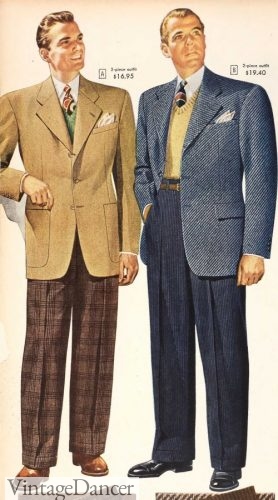
1944 sport coat outfits
In United kingdom of great britain and northern ireland the wear restrictions were harsher. Jackets could not have pleated backs, metal zippers or buttons, feature raglan sleeves, or have half-belts. Zippers in flys, chosen front wing fasteners, were allowed, although button flys were preferred and easier to obtain materials.
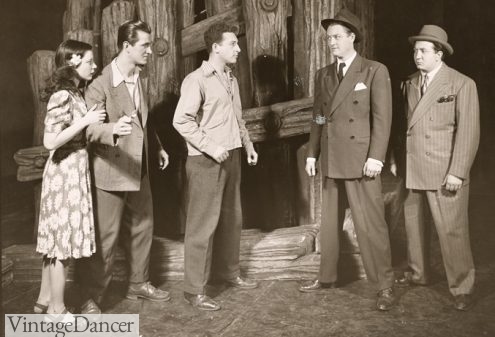
1941 actors rehearsing- both pre-war suits and coincidental vesture
State of war time vesture influenced men'due south fashion pattern after the state of war past coping or modifying uniforms into noncombatant wearing apparel. Trench coats, bomber jackets, knit undershirts, pea coats, chino pants, and aviator spectacles all have roots in WWII military wearable. With so much military surplus available after the war, civilians would buy and article of clothing military machine clothing for several more than years. The comeback in machinery, textiles, and manufacturing of military wearable fabricated mail service war ready to wear civilian clothing a booming industry. The quality and eventually affordability of gear up made clothing gradually put local tailors and seamstresses out of business.
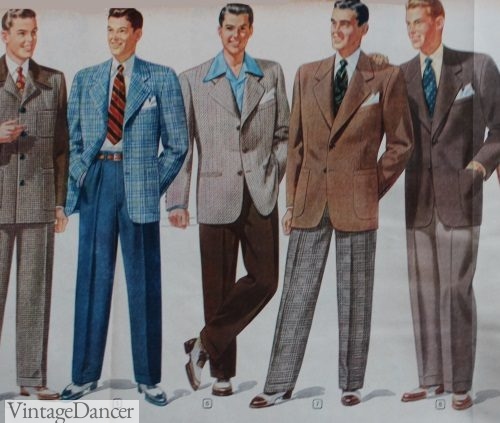
1948 Men's Semi Casual Fashion
The biggest influence war time restrictions had on men was the farther introduction of casualness. Later on the war, the need for suits to be worn at all times was replaced past more than causal sporting attire. Collarless knit tee shirts, open collar dress shirts, ascot ties, slip on loafers, and sandals in summer became the everyday man'southward dress code. Men were tired of scratchy uniforms and circumscribed suits. The freedom casual clothes brought to men was a big sigh of relief.
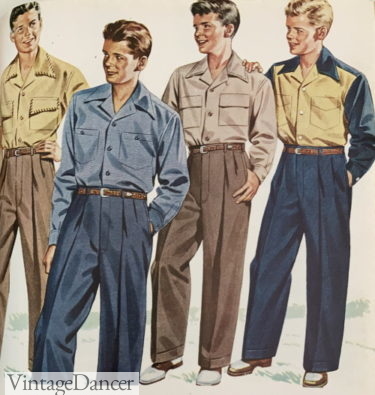
1948 casual clothes for teens
Ironically, the very wearable that caused such turmoil during the war years, the Zoot Arrange, was the single piece of fashion that influenced men'southward post state of war vesture. Longer, looser jackets, double pleated pants, big hats, and even wide ties made their way into late '40s men's fashions. Men were eager to put the war behind them and cover the vesture they were previously forbidden to wear.
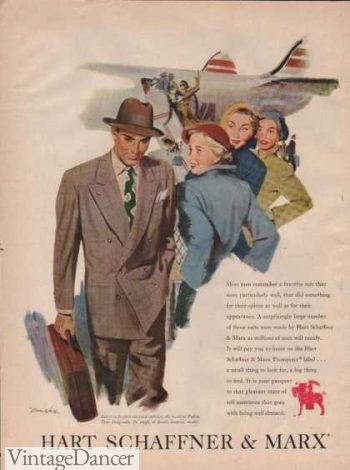
1949 the suits was withal wide and amorphous but more relaxed than earlier years.
1940s Men's Fashion History
- 1940s Men's Fashion – A detailed overview of all areas of men's fashion in the 1940s.
- 1940s Men's Suits – Learn about 1940's men's suits and clothing. Tips on creating your own look.
- 1940s Men's Coincidental Fashion – Sport coats, shirts, and sweater vests.
- Men's Outfit Ideas from the 1940s
- 1940s Men'south Formalwear – Dressing in white necktie, black tie, summer whites and semi-formal.
- 1940s men'southward Workwear & Uniforms – What wore for labor jobs and armed services positions.
- 1930-1950s Western Habiliment for Women and Men – Men's western-mode clothing from the 1930s to 1960s.
- 1940s Men'southward Shoes – Learn about and shop for 1940s style shoes. Go here to read virtually Saddle Shoes.
- 1940s Men'southward Swimwear – Swim shorts of the 1940s.
- 1940s Pajamas – Women's and men'south sleepwear, robes and slippers.
- 1940s Teenage Boys' Fashion – Boys' and young men'due south styles.
- 1940s Dance Shoes for Men – Store men'southward swing and ballroom dance shoes with 1940s fashion.
- 1940s Hats – Learn about 1940s men'due south hat styles.
- 1940s Men'due south underwear – Boxers, briefs, long johns, socks, and undershirts.
- 1940s Men's Accessories – Belt, suspenders, cufflinks, spectacles, watches, cane, pocket square, gloves, and scarves.
- 1940s Men's hairstyles and facial pilus – Common styles, trends, and training products.
- 1940s Groom Wear – 1940s wedding attire for grooms.
- 1940s Men's Costume Ideas – Archetype 1940s wait you can re-create.
- Where to shop for men's vintage inspired and reproduction wearable. Go hither for specifically 1940s men's repro clothing.
1940s Men's Mode Clothing
- Suits and Zoot Suits
- Tuxedos
- Pants and Trousers
- Shirts and Sweaters
- Vests
- Coats and Jackets
- Hats
- Shoes
- Accessories
- Neckties
- Suspenders and Belts
- Swim Trunks
- Costumes – Halloween and Party
- Men'south Sewing Patterns
- Men's Clothing in the UK
- Reproduction Men's Vesture
More 1940s Fashion History Resource
Research for the 1940s Style Guide serial involved years of gathering information from books, magazines, catalogs and online sources. Here are a few of the most useful ones:
BOOKS
- Forties Style: From Siren Suits to the New Expect past Jonathan Walford
- Esquire'due south Encyclopedia of 20th Century Men'due south Fashions Hardcover by O.E. Schoeffler
- History of Men'due south Manner by Farid Chenoune
- Reminisce Life in the Fantastic '40s
- Fashions of a Decade: The 1940's 1992, Facts on File, Inc. past Patricia Bakery
- Vintage Mode: Collecting and Wearing Designer Classics past Emma Baxter-Wright
- 20th Century Fashion past Valerie Mendes and Amy De la Haye
- Everyday Fashions of the Forties Every bit Pictured in Sears Catalogs JoAnne Olian
- Decades of Fashion Tandem Verlag by Harriet Worsley
More books in this list of Vintage Fashion History Books.
WEBSITES
- http://www.centuryinshoes.com/decades/1940/1940.html – A brief illustrated history of 1940'due south shoes
- http://www.headoverheelshistory.com/1940.html – A Research project turned history lesson on shoes
- http://www.1940s-fashions.co.uk/ (Great britain) A very overnice collection of fashion plates and advertisements feature fashion from the 1940's
- world wide web.thepeoplehistory.com/40sclothes.html – An interesting look at style and how much clothing actually toll
- www.womeninwwii.com – A site all about women who served during WW2 in the 1940'southward
- Vintage Style on Facebook– Where to acquire, store and connect with others
Fifty-fifty more resources tin can be found in this commodity: How to Inquiry Fashion History.
Source: https://vintagedancer.com/1940s/1940s-fashion-history/
0 Response to "Funny Compare Mens Style 1947 Vs 2017"
Post a Comment